






Japandi Furniture Materials: Wood, Fabric, Leather, Rattan & Stone
Summarize with AI
Get a quick summary of this article using your preferred AI assistant.


Japandi furniture is known for its natural wood finishes, calming colours and understated textures. However, creating a beautiful Japandi home is not simply about choosing furniture in beige or brown. The materials you select also affect comfort, maintenance and how well each piece fits your daily routine.
For Singapore homeowners furnishing an HDB flat, BTO apartment or condominium, the best Japandi furniture materials are those that balance natural aesthetics with practical everyday use.
This guide explores the most useful wood types, upholstery options, natural textures and stone surfaces, helping you choose furniture that looks cohesive without compromising functionality.
1. What Makes a Material Suitable for Japandi Furniture?
Japandi combines Japanese-inspired simplicity with Scandinavian warmth and functionality. Materials such as wood, fabric, leather, rattan and stone-like surfaces help create its calm, understated appearance. However, choosing the right material is also about comfort, construction and everyday maintenance, especially in Singapore homes.
The table below compares seven common Japandi furniture materials and what to consider before buying.
Swipe sideways to compare
Material |
Common furniture uses |
Visual effect |
What to check before buying |
|---|---|---|---|
Oak wood |
Sofa frames, dining tables and cabinets |
Warm tones with visible grain |
Solid wood or veneer, construction and protective finish |
Ash wood |
Chairs, sofa frames and legs |
Often pale with distinctive grain |
Frame construction, surface finish and grain variation |
Walnut wood |
Accent tables, table legs and cabinet details |
Rich brown tones and deeper contrast |
Solid wood or veneer, actual colour and finish |
Fabric upholstery |
Sofas and lounge chairs |
Soft, welcoming texture |
Fabric composition, cleaning method and removable covers |
Genuine leather |
Sofas and armchairs |
Refined texture that varies by finish |
Leather type, sunlight exposure and recommended care |
Rattan |
Dining chair seats and woven details |
Airy, natural-looking woven texture |
Natural or synthetic material, cleaning and ventilation |
Sintered stone |
Coffee tables and dining tabletops |
Clean, stone-like surface |
Edge protection, impact risks and care instructions |
Remember that the material name alone does not determine furniture quality or maintenance. The actual construction, surface finish and manufacturer's care instructions are just as important when comparing pieces for your home.
2. Choosing the Right Wood: Oak, Ash and Walnut
Wood is a defining feature of Japandi furniture, but oak, ash and walnut each create a different look. Oak offers versatile warmth, ash often has a lighter appearance with pronounced grain, while walnut introduces deeper brown tones. Understanding these differences can help you choose wood finishes that complement your existing furniture.
Oak Wood: A Warm and Versatile Foundation
Oak is a popular choice for Japandi-inspired furniture because of its visible grain and adaptable appearance. Light oak finishes pair naturally with cream or beige upholstery, while darker finishes can create a warmer, more grounded look.
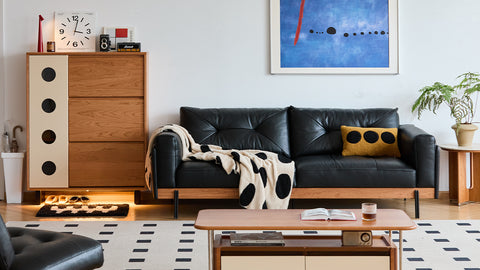
For example, the KAPE 3-Seater Sofa features a North American FAS-grade oak wood frame, paired with top-grain genuine cowhide leather on its contact areas. It shows how exposed wood and smooth upholstery can create a balanced Japandi design.
Best for: Homeowners who want a warm, versatile wood appearance that pairs easily with neutral furniture.
Ash Wood: A Light and Airy Alternative
Ash wood often has a pale appearance with distinctive, pronounced grain. It pairs naturally with neutral upholstery and simple furniture designs, making it a suitable choice for Japandi-inspired living spaces.
The NOIRU Ash Wood Coffee Table features an ash wood tabletop and frame in an original wood finish. Its rounded edges and low-profile design complement the clean, understated appearance of Japandi interiors.
Best for: Homeowners who prefer natural-looking wood finishes and simple furniture silhouettes, especially when paired with cream, beige or other neutral furnishings.

Walnut Wood: Adding Depth and Contrast
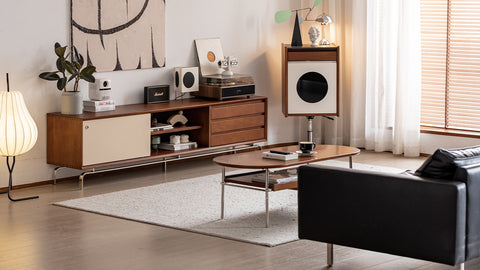
Walnut typically has richer brown tones, making it a useful choice when a Japandi interior needs more contrast. It pairs particularly well with light walls, neutral fabrics and pale wood finishes.
In a compact HDB or BTO living room, consider introducing walnut through a coffee table, side table or smaller accent piece rather than matching every item in a dark wood finish. This adds visual depth without making the overall colour scheme feel too heavy.
Best for: Homeowners who want a darker wood accent while maintaining a calm, balanced Japandi interior.
Practical tip: Before buying, compare wood samples under your home's natural and artificial lighting. Pay attention to the actual colour, grain and surface finish, as these can vary even between products made from the same wood species.
3. Fabric or Genuine Leather: Which Is Better for Your Sofa?
Both fabric and genuine leather work well with Japandi furniture, but they differ in texture, comfort and maintenance. For Singapore homeowners, the better choice depends on daily use, cleaning preferences and how the sofa feels in your living environment.
Fabric Upholstery: Soft and Comfortable
Fabric sofas add softness and texture to Japandi interiors, especially in neutral shades such as cream, beige and warm grey. Woven fabrics can also create subtle visual interest without bold patterns.
The HUG 1-Seater Sofa, for example, uses fabric sourced from Italy, which Loft Home describes as treated for antifouling. However, the actual cleaning requirements should be confirmed for the selected upholstery.
For everyday use, especially in households with children or pets, check the fabric composition, stain-cleaning instructions and whether the covers are removable and washable. Not all fabric sofas offer the same maintenance convenience.
Best for: Homeowners who prefer a soft, textured seating surface and a relaxed Japandi appearance.
Genuine Leather: A Refined Alternative
Genuine leather offers a smoother finish that pairs well with exposed wood and simple Japandi furniture designs. Unlike woven fabric, its appearance and feel depend on the leather type and surface treatment.
The KAPE 3-Seater Sofa combines an oak wood frame with top-grain genuine cowhide leather on its contact areas.
In Singapore's warm, humid climate, consider how leather feels against your skin, particularly in rooms without regular air-conditioning. Keep leather furniture away from prolonged direct sunlight and follow the manufacturer's recommended cleaning and conditioning instructions.
Best for: Homeowners who prefer a smooth leather finish and are comfortable with its care requirements.

Which should you choose? Choose fabric if you prefer woven texture and a softer feel, but check how easily it can be cleaned. Consider genuine leather if you prefer a smooth surface and are prepared for material-specific care. Whichever you choose, try sitting on the sofa and reviewing its care instructions before buying.
4. Rattan: Adding Natural Texture to Your Home
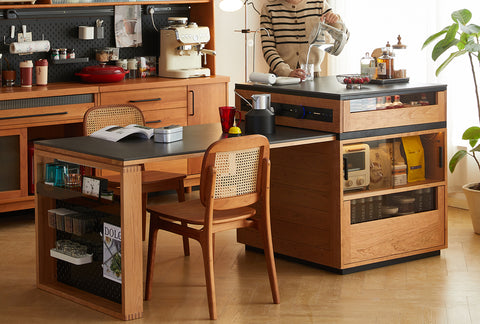
Rattan introduces a woven texture that complements the clean lines and wooden finishes commonly found in Japandi furniture. It works particularly well in dining chairs, where woven backrests or seats can add visual lightness without the bulk of fully upholstered designs.
The NOOK Walnut Wood Rattan Dining Chair combines a North American walnut wood frame with a woven rattan backrest. Measuring 44.7 × 53 × 83 cm (L × W × H), with a 45 cm seat height, it offers an example of how darker wood and natural-looking woven details can work together in a Japandi dining area.
For Singapore homes, keep rattan furniture away from prolonged dampness. Remove dust from the woven gaps with a soft brush, wipe spills promptly and allow the material to dry properly after cleaning.
Best for: Dining areas where homeowners want natural-looking woven textures paired with warm wooden furniture.

Practical tip: Before choosing a rattan dining chair, check the seat's firmness, back support and height against your dining table. If possible, try sitting on it to see whether it feels comfortable for everyday meals.
Practical tip: Before choosing a rattan dining chair, check the seat's firmness, back support and height against your dining table. If possible, try sitting on it to see whether it feels comfortable for everyday meals.
5. Sintered Stone: A Practical Choice for Japandi Tables
Sintered stone offers a clean, stone-like surface that contrasts naturally with warm wooden furniture. It is an engineered material made using high heat and pressure, rather than a slab of natural marble.
Its hard surface makes it worth considering for frequently used coffee and dining tables. However, scratch resistance, heat tolerance and cleaning requirements depend on the specific product and finish.
The SILENCE Coffee Table Set combines a beige sintered stone tabletop with North American walnut wood legs. It is available as individual tables or a two-piece nesting set, allowing the tables to be arranged together or separately according to your needs.

For compact HDB or BTO living rooms, measure the available space before choosing a coffee table. The larger SILENCE table measures 80 × 75.3 × 35 cm (L × W × H), so check that it leaves enough room to move comfortably around your sofa.
Best for: Homeowners who prefer a stone-like tabletop with contrasting wooden details and flexible table arrangements.
Practical tip: Follow the product's care instructions, use coasters or trivets where appropriate and avoid knocking heavy objects against exposed tabletop edges.
6. How to Combine Japandi Materials in a Singapore Home
Creating a Japandi interior does not mean replacing all your existing furniture. Start with the main furniture pieces you already own or plan to buy, then choose complementary wood tones and textures to create a cohesive look.
Here are three material combinations to consider for different spaces in your home.
Card 1 — Light and Airy
Material pairing: Light oak or ash wood + neutral fabric
Suggested room: HDB or BTO living room
Why it works: Pair a cream or beige fabric sofa with a light-wood coffee table or side table. The combination creates a warm, cohesive look without strong colour contrasts.
Card 2 — Warm and Natural
Material pairing: Ash wood + woven rattan
Suggested room: Dining area
Why it works: Choose dining chairs with wooden frames and woven rattan seats to introduce texture alongside a simple wooden dining table.
Card 3 — Balanced Contrast
Material pairing: Walnut wood + sintered stone
Suggested room: Living room coffee-table area
Why it works: A coffee table with darker walnut details and a lighter sintered stone surface adds contrast while keeping the overall design understated.
For compact HDB flats or condominium living rooms, consider furniture dimensions alongside the material combinations. A chair with an open, lightweight-looking design may still occupy considerable floor space, while a coffee table that looks proportionate in a showroom may restrict movement at home.
Practical tip: Start with your largest existing or planned furniture piece, such as a sofa or dining table. Check where it will fit and how people will move around it before choosing smaller furniture and decorative accents.
7. What to Check Before Buying Japandi Furniture
Before purchasing Japandi furniture, look beyond the appearance of the materials. These five checks can help you choose pieces that suit your home and daily routine.
Check the actual construction. Confirm whether the furniture uses solid wood, wood veneer, engineered wood or a combination. For sofas, check which parts use the stated wood or leather material rather than assuming it applies to the entire piece.
Review the surface finish and maintenance. Check the protective finish, recommended cleaning methods and whether special care products are required. Furniture with similar appearances may have different maintenance needs.
Consider Singapore's humidity. Keep wooden and woven furniture away from prolonged dampness and maintain suitable ventilation. Follow the manufacturer's care instructions, especially for natural materials.
Test comfort and functionality. Sit on sofas and dining chairs where possible to assess firmness, support and seat height. For frequently used furniture, check upholstery cleaning requirements and how easily the piece can be used.
Measure your space and delivery access. Check the furniture's full dimensions in centimetres, allowing room for walkways, opening doors and moving chairs. For larger pieces, also confirm that the furniture can pass through your entrance, corridors and lift, where applicable.
8. Final Thoughts
The best Japandi furniture materials are not necessarily the most expensive or the most luxurious. They are the ones that complement your home's appearance while meeting your practical needs.
Oak and ash wood provide a natural foundation, walnut introduces deeper tones, fabric and leather offer different seating experiences, rattan adds woven texture, and sintered stone provides a contrasting tabletop surface.
For Singapore homeowners, a successful Japandi interior comes from choosing the right combination of materials, finishes and furniture sizes, rather than trying to include every natural material in one room.
Explore materials based on how you use each space, and take time to compare actual finishes, upholstery samples and product dimensions before deciding.
Frequently Asked Questions
Here are a few additional questions to consider when selecting Japandi furniture materials.
Is sintered stone the same as natural marble?
No. Sintered stone is an engineered material, while natural marble is quarried stone. They can have similar visual finishes, but their composition and maintenance requirements differ. Always check the specific tabletop's care instructions.
Does Japandi furniture need to be made entirely from solid wood?
No. Japandi is a design approach, not a requirement that every component must be solid wood. Furniture can combine wood, fabric, rattan, leather or engineered surfaces while maintaining a natural-looking, minimalist appearance.
Can rattan furniture be used in Singapore's humid weather?
Rattan furniture can be used indoors in Singapore, but it should not be left persistently damp. Good ventilation, regular dust removal and suitable cleaning practices help maintain woven furniture.
What should I check when choosing a light-coloured Japandi sofa?
Consider the upholstery composition, cleaning instructions and how often the sofa will be used. Light fabrics may show visible marks more readily, so compare actual material samples and select a colour and texture that suit your household.
Find the Right Japandi Furniture for Your Home
Discover Japandi-inspired furniture featuring natural wood, soft upholstery, woven textures and stone-like surfaces. Compare materials and product dimensions to find pieces that suit your Singapore home.
Explore Japandi Furniture




Leave a comment