












































































Tall Cabinet vs Low Cabinet: Which Is Better for Your Space?
Summarize with AI
Get a quick summary of this article using your preferred AI assistant.


You know you need more storage, but should you use the empty wall space with a tall cabinet or choose a longer, lower cabinet instead?
Both can work well. The problem starts when the cabinet solves your storage problem but creates another one: a narrow walkway, a room that feels visually heavy, or shelves that are difficult to reach.
For Singapore HDB flats and condos, the better choice usually depends on three things: how much floor space you have, what you need to store and how open you want the room to feel.
This guide keeps the decision simple.

Quick Answer: Tall Cabinet or Low Cabinet?
Choose a tall cabinet when you need more storage but have limited floor space. Choose a low cabinet when you want easier access, a usable top surface and a more open sightline across the room.
In simple terms:
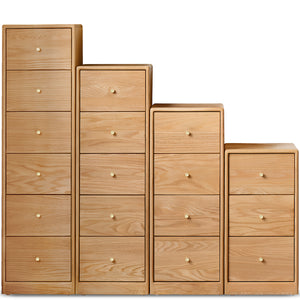
- Tall cabinet: better use of vertical space
- Low cabinet: makes the room feel more open
- Glass display cabinet: useful when storage and display are equally important
- Sideboard cabinet: practical for dining and living areas
There is no single option that is better for every room.
Tall Cabinet vs Low Cabinet at a Glance
| Feature | Tall Cabinet | Low Cabinet |
|---|---|---|
| Floor Space | Uses less floor width for more vertical storage | Usually requires more horizontal wall space |
| Storage Capacity | Good for multiple shelves and larger collections | Better for everyday essentials and lower storage |
| Visual Effect | Can create a stronger vertical presence | Keeps more wall and sightline visible |
| Accessibility | Upper shelves may be harder to reach | Most storage is easier to access |
| Top Surface | Usually less practical as a daily surface | Useful for lamps, decor, serving items or displays |
| Best For | Narrow walls, books, display items and vertical storage | Living rooms, dining rooms and open-plan spaces |
When Should You Choose a Tall Cabinet?
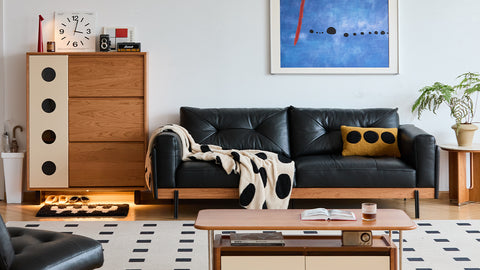
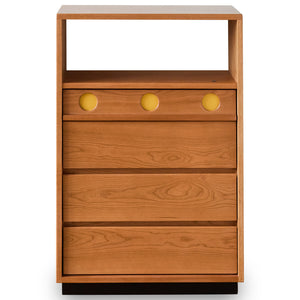
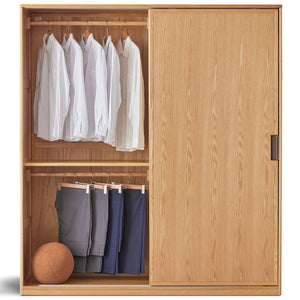
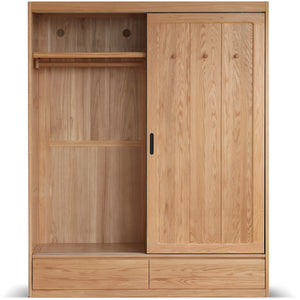
A tall cabinet makes sense when you have limited floor space but plenty of unused wall height.
Good for Narrow Walls
Instead of placing two low cabinets side by side, one taller cabinet may provide enough storage while using less wall width.
This can work well beside a dining area, in a bedroom corner or along an entryway where floor space is limited.
Good for Books and Display Items
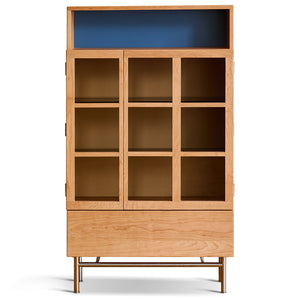
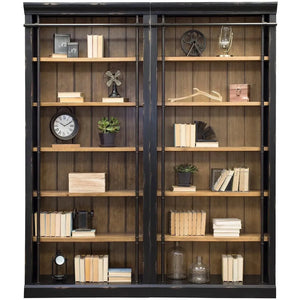
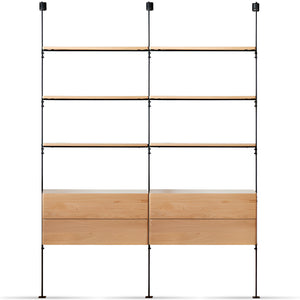
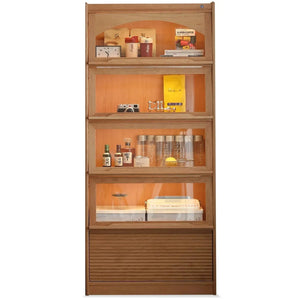
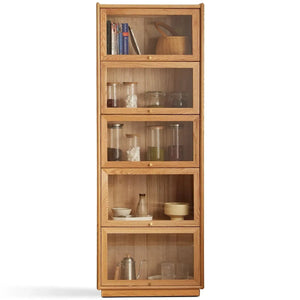
A tall glass display cabinet can provide several levels of display space without spreading across a long wall.
Glass doors also let you see the items inside while helping keep them more protected than completely open shelves.
Good for Mixed Storage
A tall cabinet can combine:
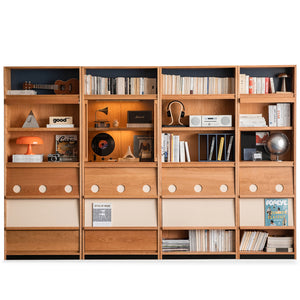
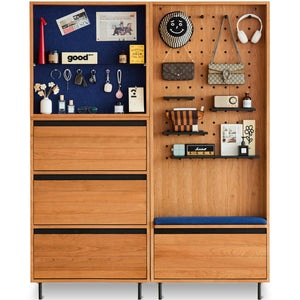
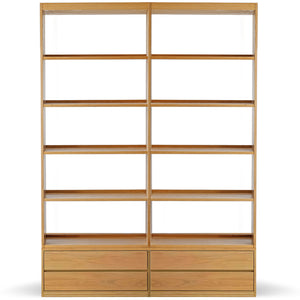
- Open cabinet shelves
- Glass display sections
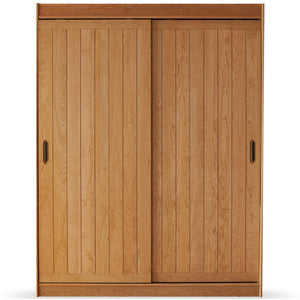
- Closed compartments
- Drawers
This works well when you want frequently used items lower down and less frequently used items on higher shelves.
What to Watch Out For
Tall furniture has more visual presence, so avoid filling every wall with full-height storage.
Also check stability carefully. Follow the product's installation and wall securing instructions where provided, particularly for tall or narrow cabinets.

When Should You Choose a Low Cabinet?
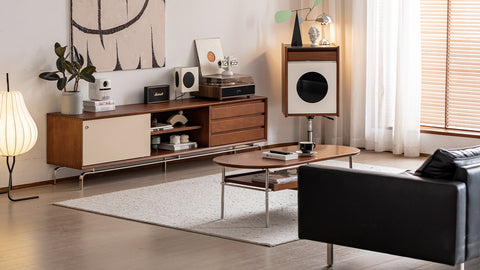
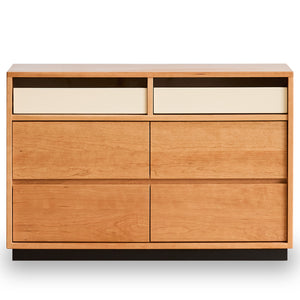
A low cabinet is often the easier choice when you want storage without making the room feel dominated by furniture.
Good for Open Living Areas
A lower cabinet keeps more wall visible, which can help a compact living or dining room feel more open.
This is especially useful in HDB layouts where the living and dining areas share the same visual space.
Good When You Need a Surface
The top of a low cabinet can be used for:
- Lamps
- Decor
- Photo frames
- Serving items
- Coffee equipment
- Items you use frequently
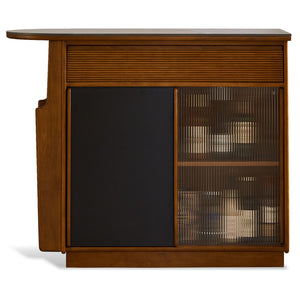
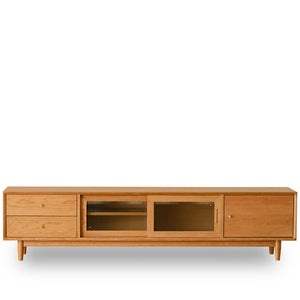
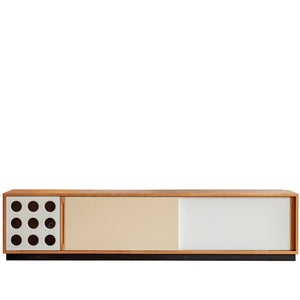
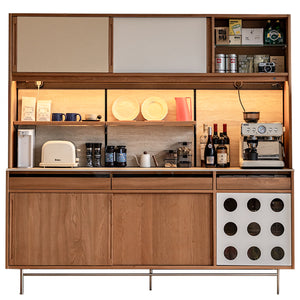
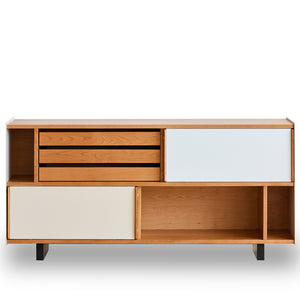
A sideboard cabinet is a good example. It provides enclosed storage below while keeping the top available for everyday use.
Good for Easy Access
If you need to access everything regularly, low cabinet shelves and drawers are generally easier to reach than the upper section of a tall cabinet.
What to Watch Out For
A low cabinet may use more wall width to provide the same amount of storage.
Before buying, check both the cabinet width and depth. A long cabinet that is too deep can still make a narrow room feel crowded.
Match the Cabinet to the Room
The same cabinet will not work equally well in every part of the home.
Living Room
A low sideboard can provide hidden storage without covering too much wall space.
Consider Tall Storage WhenYou need bookshelves or display space but have limited floor width.
Dining Area
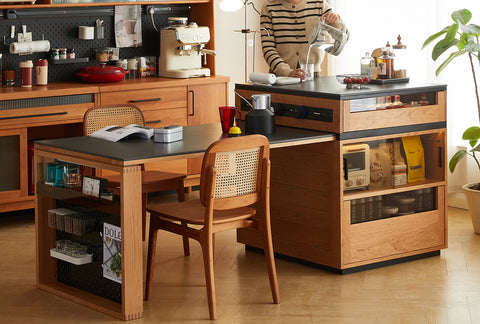
A buffet or sideboard cabinet keeps plates, glasses and serving items close to the dining table.
Useful FeatureA low top surface can also work as an extra serving or display area.
Bedroom
A low bedroom cabinet can work below windows or beside other furniture.
Consider Tall Storage WhenYou need more vertical storage without adding another wide chest or bedside cabinet.
Entryway
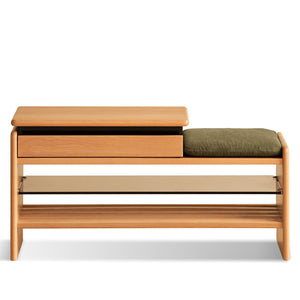
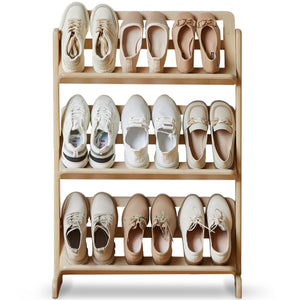
A slim shoe and storage cabinet can organise footwear without taking over a narrow entrance.
Check FirstMake sure the depth does not interfere with the main walking route or front door.
Loft Home's shoe cabinet collection includes different storage configurations for entryways where footprint and access matter.
Choose Open, Closed or Glass Storage
Height is only part of the decision. Think about what will actually sit inside the cabinet.
Closed Cabinet
Best for items you want out of sight, such as documents, cables, household supplies or miscellaneous everyday items.
Closed storage usually creates the calmest visual appearance.
Open Cabinet With Shelves
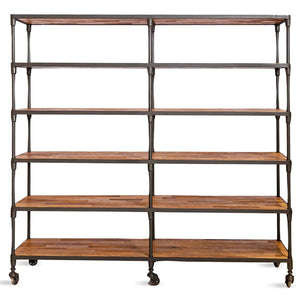
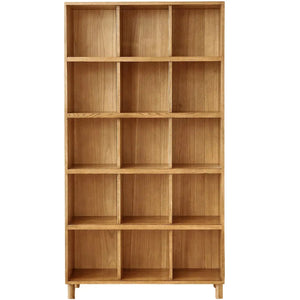
Open shelves work well for books, plants and selected decor.
They are easy to access, but they can look cluttered quickly if every shelf is filled.
Display Cabinet With Glass Doors
A display cabinet with glass doors sits between open and closed storage.
It works particularly well for collectibles, glassware, books and decor that you want to see while keeping the display more contained.
Mixing Storage Types
For many homes, the most practical solution is a combination.
For example, use glass or open cabinet shelves for display items and closed doors or drawers for everyday clutter.

What About TV Cabinets?
The same tall-versus-low principle applies around the TV, but most living rooms do not need a large tall TV cabinet unless substantial storage is required.
TV Console With Legs
A raised console shows more floor underneath and can make the TV area feel visually lighter.
TV Console Without Legs
A floor-standing design provides a stronger visual base and can offer useful enclosed storage for routers, controllers, remotes and media equipment.
TV Hanger
A TV hanger or floating setup can keep more floor space clear when you do not need much storage below the television.
Tall TV Cabinet
A taller cabinet beside the TV can add vertical storage, but check whether it makes the entertainment wall feel unbalanced or crowded.
Compare Loft Home's TV console options based on storage needs and room proportions rather than choosing the largest unit that fits the wall.
Measure Before Buying
There is no single standard height that every freestanding cabinet should follow. Cabinet dimensions vary according to purpose, storage layout and design.
Instead of looking for one ideal height, measure how the cabinet will work in the actual room.
Check:
- Cabinet width, depth and height
- Walking space in front
- Door and drawer opening clearance
- Nearby windows and switches
- Power points
- Ceiling height
- Cleaning access
- Lift, corridor and doorway delivery access
Check Reach Height
A tall cabinet is only useful if you can comfortably use the shelves you access regularly.
Keep daily-use items on easier-to-reach shelves and reserve upper levels for items you need less often.
Check Depth Carefully
Depth often affects a compact room more than height.
A tall but shallow cabinet may work better than a lower, deeper unit when the main concern is preserving walking space.
For more room-planning tips, read our guide on choosing storage furniture without making a room feel smaller.
Simple Cabinet Buying Checklist
Before Buying a Cabinet
List what you actually need to store.
Measure the available wall width, depth and height.
Choose tall storage when floor space is limited.
Choose low storage when you want a more open sightline.
Decide whether items should be displayed or hidden.
Check doors and drawers in their fully open position.
Keep frequently used items within easy reach.
Confirm lift, corridor and doorway delivery access.
Common Cabinet Mistakes
Choosing by storage capacity alone: A cabinet that holds more is not useful if it makes the room uncomfortable to move through.
Ignoring depth: A shallow tall cabinet can sometimes suit a narrow room better than a deep low cabinet.
Putting daily items too high: Upper shelves should usually hold items you access less frequently.
Using too much open shelving: Open shelves look light when empty but can become visually busy when overloaded.
Buying a low cabinet without considering wall width: Low storage can require significantly more horizontal space.
Ignoring stability: Follow installation and anchoring instructions supplied with tall furniture where applicable.
Forgetting delivery access: Tall cabinets still need to pass through your lift, corridor and doorway before reaching the room.
Final Thoughts
A tall cabinet is usually better when you want to use vertical space and keep the floor footprint smaller. A low cabinet is usually better when you want easy access, a useful top surface and a more open-looking room.
Neither choice is automatically better.
Start with what you need to store, measure the available depth and width, and consider how much visual space you want to keep open.
For display pieces, a tall glass cabinet may work well. For a dining or living room, a low sideboard may make more sense. In an entryway, a slim vertical shoe cabinet may solve the problem with less floor space.
Explore Loft Home's cabinet collection in Singapore to compare different heights, materials, shelves, drawers and storage configurations.
Frequently Asked Questions
Simple answers to common questions about choosing tall and low cabinets.
Is a tall cabinet or low cabinet better for a small room?
A tall cabinet can be better when floor space is limited because it uses vertical space. A low cabinet may be better when you want the room to feel more open. The best choice depends on the cabinet depth, wall space and what you need to store.
Is there a standard height for cabinets?
No single height applies to all freestanding cabinets. Display cabinets, sideboards, bedside cabinets, shoe cabinets and storage cabinets are designed for different purposes, so always check the individual product dimensions.
Do tall cabinets make a room look smaller?
Not necessarily. A tall cabinet can save floor space, but several large cabinets across the same room may feel visually heavy. Keep some wall space open and choose a suitable depth.
What is a common mistake when choosing cabinet height?
A common mistake is choosing extra height for more storage but placing frequently used items on shelves that are difficult to reach. Plan shelf use before choosing the cabinet.
Is a glass display cabinet good for a small room?
It can be. Glass doors keep displayed items visible and can feel lighter than a completely solid cabinet. Avoid overcrowding the shelves if you want the room to stay visually calm.
What should I store in a low sideboard cabinet?
A low sideboard works well for tableware, serving items, books, documents and everyday household essentials. Its top can also be used for lamps, decor or serving items.
Looking for the Right Cabinet for Your Space?
Explore Loft Home cabinets and compare tall, low, open, enclosed and display designs for living rooms, dining areas, bedrooms and entryways.
Explore Cabinets





Leave a comment